
What is a jacquard harness? Its parts, from top to bottom
On a jacquard loom, the harness carries the jacquard's decision down to each warp end. We walk through its parts, from module to heddle, and the signs that a harness needs renewing.
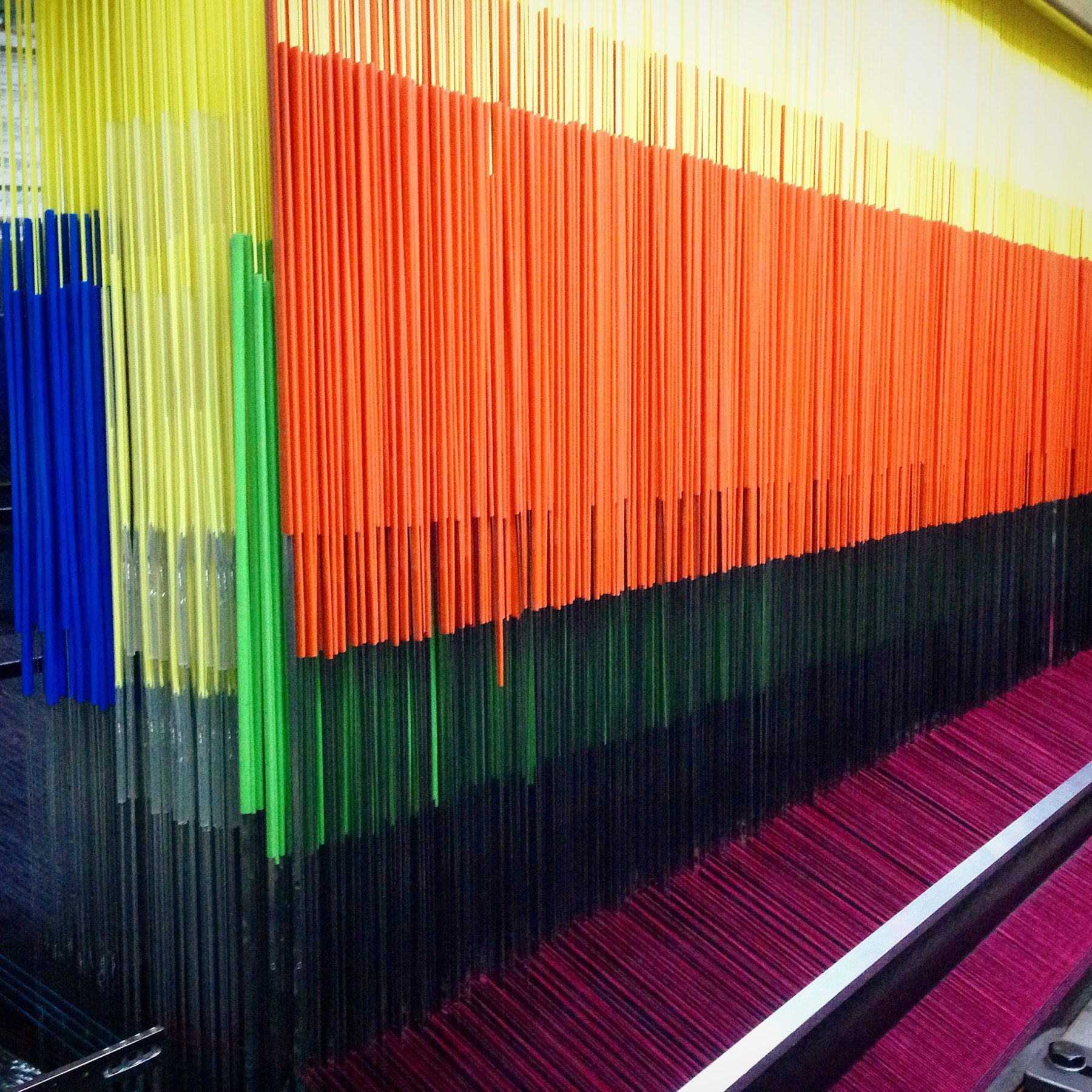
On a jacquard loom, the design comes from lifting and lowering every warp end on its own. The jacquard decides which ends lift. The system that carries that decision down to the warp is the harness.
If the harness is wrong, the fabric will be wrong no matter how good the jacquard is: warp ends break, the shed doesn’t open cleanly, the design drifts. Knowing the parts makes it easier both to trace a fault and to order a new harness.
The parts of a harness
Let’s start at the jacquard and work down to the warp.
Hooks and modules. On electronic jacquards each hook works inside a module. Stäubli jacquards use module types such as M4, M5 and M6. The module decides whether a hook stays up or down.
Pulleys and quick links. These connect the hook’s movement to the cord below. A harness set usually holds a pulley, two quick links, a short cord and a long cord; some sets are knotted. What goes into a set depends on the jacquard make and the fabric.
Harness cord. The cord that runs from the pulley down to the heddle. Hundreds or thousands of cords across the loom have to work at the same length and tension, so the cord’s gauge and material directly affect how long the harness lasts.
Comber board. The perforated board that holds the cords in the right order and spacing across the loom width. Its hole pattern follows the loom width and the harness plan.
Heddle. The wire whose eye the warp end passes through. The eye’s size and finish decide how much the yarn rubs on every pick.
Jacquard spring. The spring at the bottom of the heddle pulls it down when the hook releases, closing the shed. Its length and tension are chosen for the job.
What decides the harness?
The same jacquard needs a different harness for different work. A harness plan looks at:
- Fabric: velvet, carpet, terry, upholstery, labels or narrow fabrics.
- Hook count and module type.
- Loom width and warp density.
- The design repeat.
The tie type is chosen from these. In the field you’ll find Cenova, Belgian, Spinger and velour ties, each with its own connection layout.
When should a harness be renewed?
Every harness wears out. These are signs it’s time to look at yours:
- Warp breaks are more frequent than they used to be,
- The shed doesn’t open cleanly or some heddles don’t return,
- Cords are worn, heddles rusted or eyes damaged,
- The loom is moving to a different fabric, width or design.
One supplier for the whole harness
When heddles come from one place, springs from another and pulleys from a third, the parts may not match, and when something goes wrong nobody owns the problem. At Güryay Tekstil we supply heddles, springs, pulleys and cord together, chosen to match. Our Harness Masters team can visit your mill to see the loom; the survey is free.
Tell us what you weave and which jacquard you run, and we’ll propose the harness for your loom.